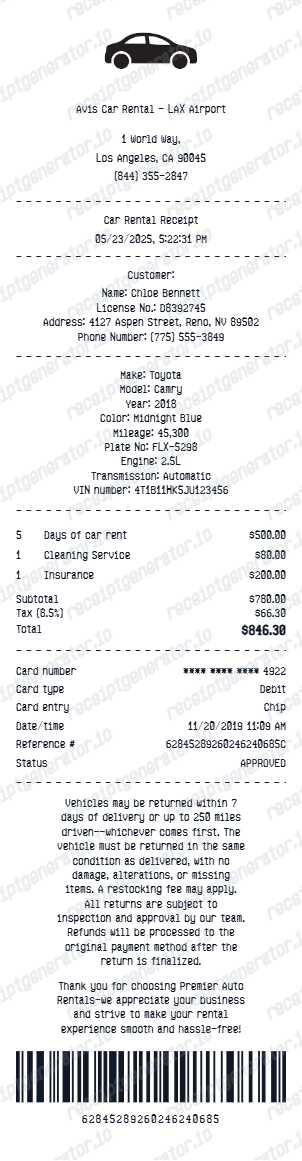
Avis Rental Car Receipt: What to Keep
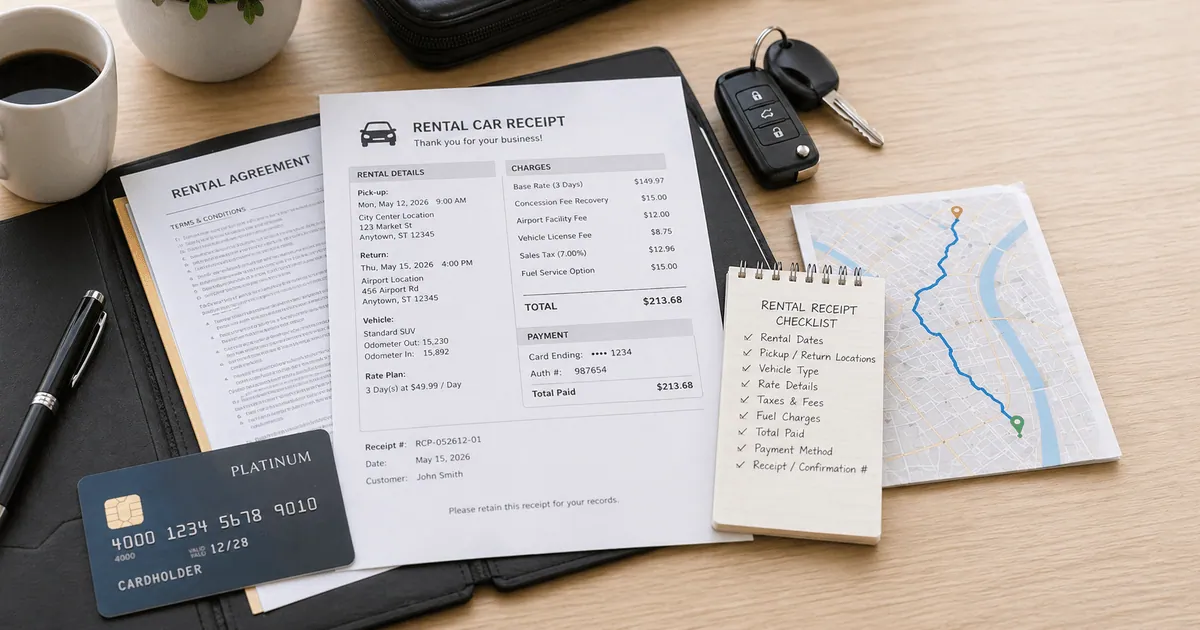
Ready to create your own? Use our free receipt generator — no account needed.
Generate Rental Car Receipt →On this page
An Avis rental car receipt is most useful when it clearly shows the rental period, location details, billing lines, and final total. That is what expense teams, travel records, and insurance workflows usually rely on.
For business-travel documentation, the IRS travel-expense rules are the clearest baseline for what the paid rental record should preserve. See IRS Publication 463.
Quick Answer
A strong Avis rental car receipt should clearly show the rental dates, pickup and return locations, vehicle details, taxes, fees, and total charged.
Key Fields to Keep
An Avis rental car receipt should usually show:
- reservation or rental agreement reference
- pickup date and location
- return date and location
- vehicle class or model
- base rental charge
- taxes and airport fees
- insurance or protection add-ons
- fuel or mileage charges if applicable
- total paid
Those are the fields most likely to matter when you need the record later.
Why This Receipt Matters
Avis rental car receipts are commonly used for:
- corporate travel reimbursement
- client trip records
- insurance documentation
- personal travel expense tracking
If the fee breakdown is unclear, the record becomes harder to use for finance review.
That is especially true when the rental record needs to support reimbursement, because reviewers usually want the final paid amount plus the pickup, return, and fee details in one place.
Use the Original Billing Record First
If the original Avis billing record is available, use it first. That gives you the strongest source for dates, locations, and rental charges before you create a cleaner copy for your files.
Need a Cleaner Avis Receipt PDF?
If you already verified the rental details and want a cleaner PDF, use the Avis Receipt Generator.
Create an Avis Rental Car Receipt
Use the Avis receipt template to organize verified rental details into a clean PDF.
Related Guides
Final Takeaway
An Avis rental car receipt is most useful when the rental period, billing lines, and total charged are easy to verify. Start with the original record, then create a cleaner PDF if you need a more readable version for your files.
FAQ
A useful Avis rental car receipt should show the rental dates, pickup and return locations, vehicle details, fees, taxes, and total charged.
Corporate travel and reimbursement reviews usually depend on those fields.
People usually keep it for travel reimbursement, insurance documentation, business records, or personal trip expense tracking.
The clearer the billing breakdown is, the easier the record is to review later.