Retail Receipt for Expense Reports
Ready to create your own? Use our free receipt generator — no account needed.
Browse Receipt Templates →On this page
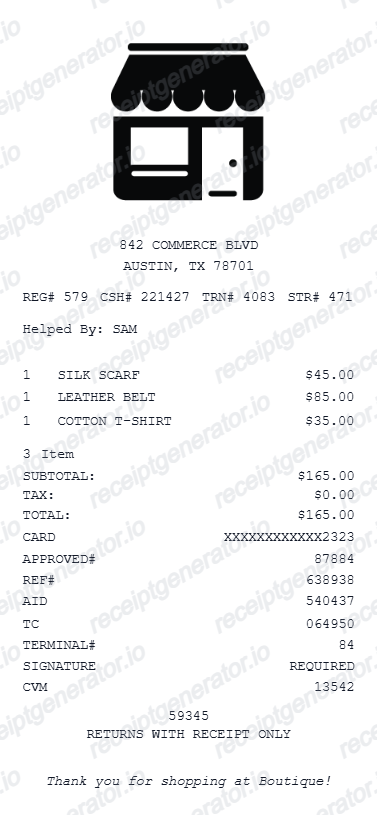
If you need a retail receipt for an expense report, the itemized store record is what reviewers usually rely on. A clean report shows what was purchased, when, and how much, plus a short note on the business purpose.
Quick Answer
For an expense report, a retail receipt should clearly show the store, date, itemized purchase, tax, and total paid, along with a short business purpose.
What Reviewers Usually Want
An expense-report-ready retail record usually works best when it shows:
- store name
- date
- itemized purchase
- subtotal
- tax
- total paid
- payment method
- a short business purpose note
That gives the reviewer enough information to approve the purchase quickly.
Why Itemized Detail Speeds Up Approval
Itemized detail matters most when:
- the purchase mixes business and personal items
- the expense needs policy review
- the receipt is part of a larger trip or project claim
- tax detail matters for accounting
That matches the IRS recordkeeping standard for business expenses, which expects the amount, date, and purpose of the purchase to be documented clearly. See IRS Publication 463.
Organize a Cleaner Expense Record
If you already verified the purchase details and want a cleaner backup for your report, use the Store Receipt templates.
Create a Retail Receipt for Expense Reports
Use a store receipt template to organize verified purchase details into a cleaner, approval-ready format.
Related Guides
Final Takeaway
For an expense report, the best retail record is the original itemized store receipt with clear purchase and tax detail, plus a short business-purpose note. Build a cleaner backup from those verified details if you need one.
Official IRS Reference
FAQ
An expense report usually needs the store, date, itemized purchase, tax, total paid, and a short business purpose.
A clear itemized record makes approval faster.
Most expense policies prefer an itemized receipt over a card-only summary.
Itemized detail shows exactly what was purchased, which speeds up review.