Keeping Vehicle Maintenance Records for Taxes
Ready to create your own? Use our free receipt generator — no account needed.
Browse Receipt Templates →On this page
Keeping Vehicle Maintenance Records for Taxes comes down to keeping the right documentation. An itemized receipt is what supports a deductible purchase or accurate tax record.
Quick Answer
How self-employed drivers and business owners should track and file oil change receipts as deductible vehicle maintenance expenses.
What a Tax-Ready Receipt Shows
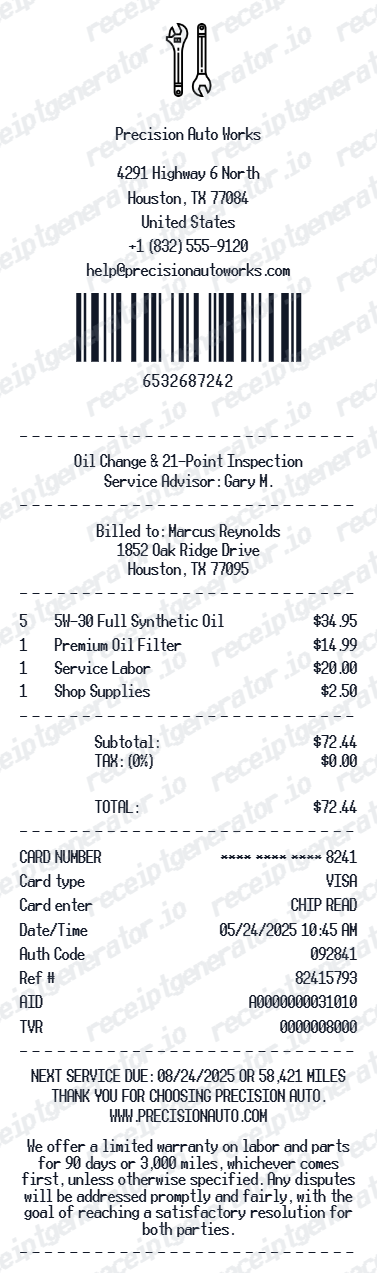
For tax records, a receipt works best when it clearly shows:
- the seller or provider
- the date
- the itemized purchase or service
- the amount paid and tax
- the business purpose, where relevant
That matches the IRS recordkeeping standard for business expenses. See IRS Publication 463.
How Long to Keep Records
The IRS generally recommends keeping supporting records for at least three years after filing. Keep receipts longer for larger purchases or anything that may be audit-sensitive.
Need a Cleaner Oil Change Receipt Record?
If you have the original purchase details and want a cleaner, structured copy for your files, use the Oil Change Receipt Generator.
Open the Oil Change Receipt Generator
Create a structured Oil Change-style receipt from your verified purchase details.
Related Guides
- How to Read an Auto Service Receipt
- What Oil Change Receipts Do You Need for a Warranty Claim?
- Oil Change Receipt Example
Final Takeaway
How self-employed drivers and business owners should track and file oil change receipts as deductible vehicle maintenance expenses. Keep the original Oil Change receipt as your proof of purchase, and build a cleaner copy from those verified details if you need one.
FAQ
Yes, if it is itemized and the purchase is a legitimate deductible expense with a clear date and amount.
Generally at least three years after filing, and longer for large or audit-sensitive purchases.