Gas Receipt for Reimbursement
Ready to create your own? Use our free receipt generator — no account needed.
Generate Gas Receipt →On this page
If you need a gas receipt for reimbursement, the volume and cost details matter most. Finance teams usually want to see where the fuel was purchased, when it was purchased, and what the final charge was.
Quick Answer
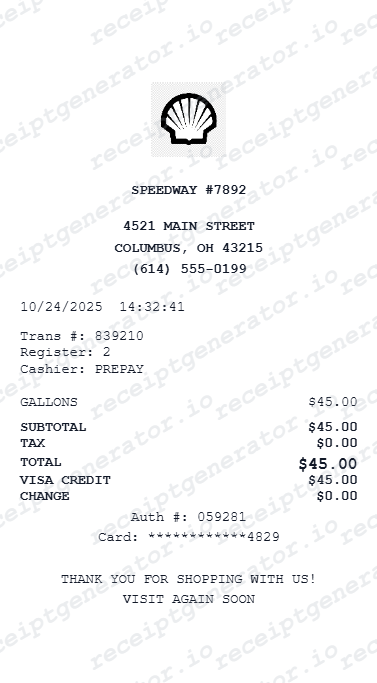
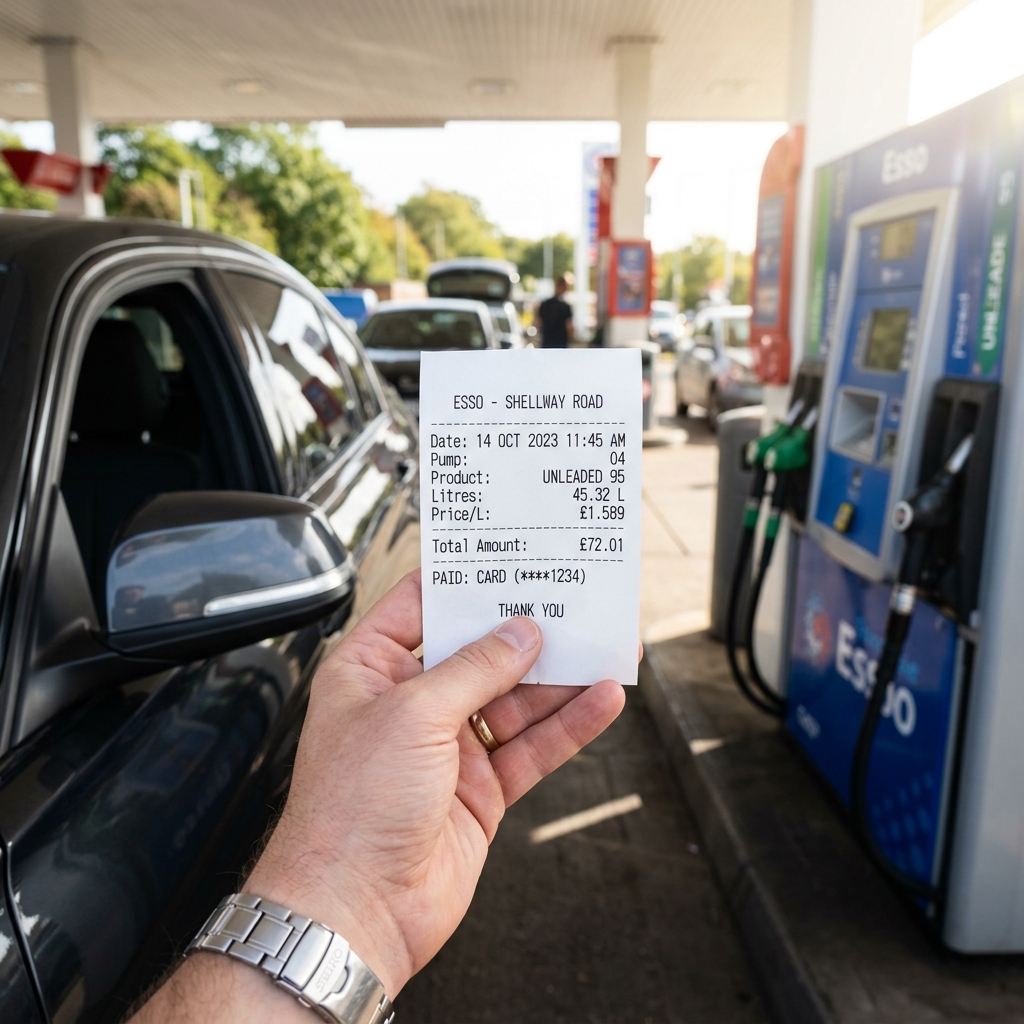
For reimbursement, a gas receipt should clearly show the station, date, fuel volume, unit price, total paid, and payment method.
What Finance Teams Usually Need
A gas reimbursement record usually works best when it shows:
- station name
- date
- gallons or liters
- fuel type
- price per unit
- total paid
- payment method
That gives finance enough information to review the fuel expense quickly.
For tax and reimbursement support, Publication 463 is the main IRS reference for vehicle and travel expense records:
When Detail Matters Most
Detailed fuel information is especially important when:
- the fuel supports business travel
- the purchase is for a fleet or company vehicle
- the expense needs quantity verification
- the receipt is part of a larger travel claim
Organize a Cleaner Backup Record
If you already verified the fuel details and want a cleaner backup for your files, use the Gas Receipt Generator.
Create a Gas Receipt Record
Use the gas receipt template to organize verified fuel details into a cleaner reimbursement-ready format.
Related Guides
Final Takeaway
For reimbursement, the best gas record is the original fuel transaction with clear volume and cost detail. If you need a cleaner backup for your own files, build it from those verified details.
Official IRS Reference
FAQ
Yes, if it clearly shows the station, date, gallons or liters, price per unit, and total paid.
That is usually enough for fuel and travel expense review.
It should show the station, purchase date, fuel volume, unit price, and total paid.
A clear quantity and cost record is usually easiest for finance teams to review.