Hotel Receipt for Reimbursement
Ready to create your own? Use our free receipt generator — no account needed.
Generate Hotel Receipt →On this page
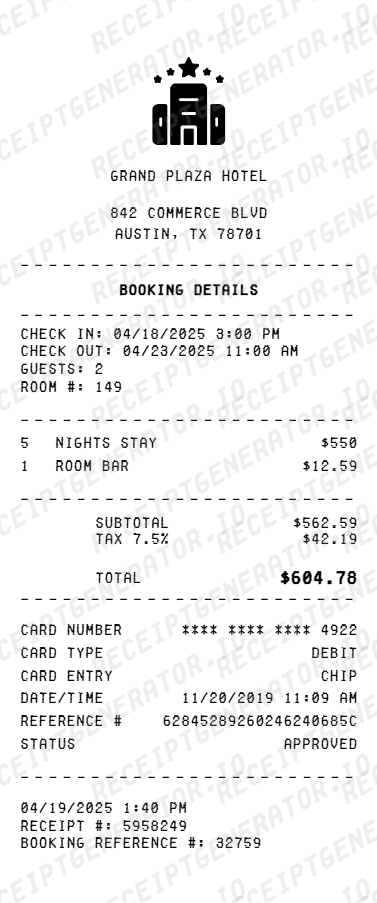
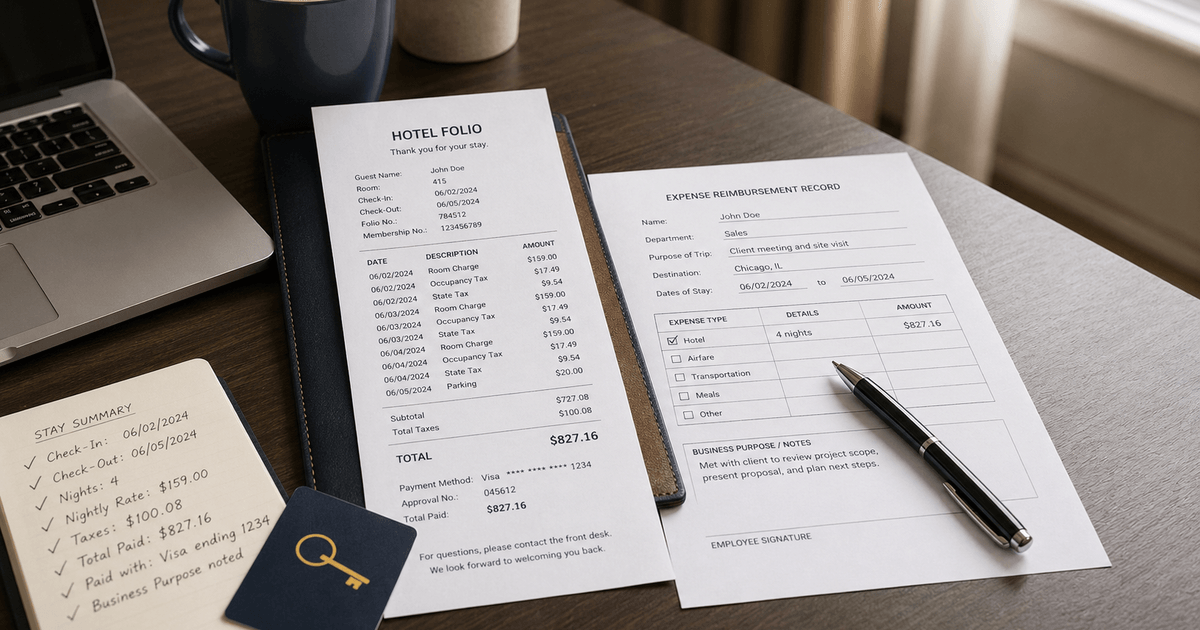
For hotel reimbursement, the best document is usually a hotel folio, not just a payment confirmation. A folio shows the full stay: room nights, tax lines, and any extra charges such as parking or resort fees.
The IRS travel-record rules are the baseline for what needs to be documented on lodging expenses, which is why finance teams usually ask for the most itemized hotel record available. See IRS Publication 463: Travel, Gift, and Car Expenses.
What a Hotel Receipt Should Include
Finance teams usually want:
- Guest name
- Hotel name and full address
- Check-in and check-out dates
- Nightly room rate breakdown
- Occupancy taxes and hotel fees
- Total paid
- Payment method or last four digits of the card
If one of those fields is missing, the receipt may be kicked back for review.
The IRS travel-record guidance is the main baseline for what needs to be documented on lodging expenses.
Hotel Folio vs. Basic Receipt
A simple receipt confirms payment. A folio is more useful for reimbursement because it shows:
- Each room night separately
- Taxes by type
- Parking, room service, or destination fees
- The final balance and payment status
That extra detail makes the folio easier to approve in systems like Concur, Expensify, or Ramp.
If You Lost the Original Hotel Receipt
Start by requesting the original from the hotel or booking platform. If you still need a personal backup for your records, use the details from your stay confirmation and payment record to rebuild the document cleanly.
Related Guides
Official IRS Reference
FAQ
Most expense teams want the guest name, hotel name and address, stay dates, nightly room charges, taxes and fees, total paid, and payment method.
Yes. A hotel folio is usually better because it breaks down nightly room rates, taxes, and extra charges.
Sometimes as backup, but most finance teams prefer the final folio or receipt showing payment.