Repair Receipt Lookup

Ready to create your own? Use our free receipt generator — no account needed.
Generate Repair Receipt →On this page
If you need a repair receipt, start with the original service record. In most cases that means the service provider’s receipt, work order, invoice, email confirmation, or payment record tied to the repair.
Quick Answer
To look up a repair receipt, start with the service provider, work order, emailed receipt, or payment record tied to the repair transaction.
Where Repair Receipts Usually Come From
Repair receipts usually come from:
- the service provider or repair shop
- the emailed work order or service confirmation
- the repair invoice or receipt
- the payment card record
Those are the most useful sources for:
- warranty records
- insurance documentation
- reimbursement support
- service and maintenance tracking
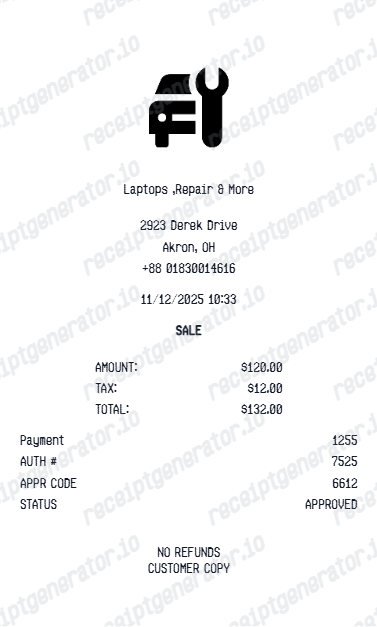
What a Repair Receipt Should Include
A useful repair receipt usually includes:
- service date
- service provider name
- labor detail
- parts detail
- subtotal
- tax if applicable
- total paid
That aligns with the IRS standard for keeping enough detail to substantiate a business expense from the original service record when possible. See IRS Publication 463.
For claims and warranty support, labor and parts detail are usually the most important sections.
Need a Cleaner Repair Record?
If you already verified the original repair details and want a cleaner version for your files, use the Repair Receipt Generator.
Open the Repair Receipt Generator
Create a structured repair-style receipt using the verified details from your original service record.
Related Guides
Final Takeaway
If you need a repair receipt, recover the original service details first. Once those are confirmed, you can organize them into a cleaner repair record for your own files.
FAQ
Start with the service provider, emailed work order, repair invoice, or payment record tied to the service.
Those are usually the fastest ways to recover the original repair details.
A useful repair receipt should show the service date, labor, parts, total paid, and service provider details.
Those are the details most people need for records, warranty support, or reimbursement.